
Inside Southern Research’s BSL-2 and BSL-3 Capabilities: What Sponsors Should Know About GCLP-Ready Infectious Disease Studies
As emerging and re-emerging infectious diseases continue to shape global public health priorities, vaccine and antiviral developers face growing pressure to generate high-quality clinical data—often under accelerated timelines and heightened regulatory scrutiny. For many programs, especially those involving live or high-risk pathogens, reliable virus-related clinical sample testing becomes a critical determinant of trial success.
Southern Research supports these programs by combining deep virology expertise, rigorously controlled biosafety infrastructure, and decades of experience executing clinical assays that regulators and sponsors trust.
Working Safely With Live Infectious Viruses
One of Southern Research’s most distinctive capabilities lies in its ability to handle live infectious viruses under tightly regulated conditions. Certain immunogenicity and efficacy studies, particularly those involving emerging or rare pathogens, require neutralization assays using infectious virus strains that mirror real-world exposure.
Southern Research operates CDC-approved BSL-3 laboratories qualified to handle select agents under stringent regulatory oversight. For pathogens such as mpox (monkeypox) and H5N1 highly pathogenic influenza, this includes compliance with select agent regulations governing everything from storage and access to the number of trained personnel required to handle viral material. These safeguards are not theoretical—they are embedded into daily laboratory operations and audited continuously.
As a result, Southern Research can support vaccine programs that require live-virus neutralization assays conducted under GCLP conditions, an area where relatively few CROs are fully qualified to operate.
Supporting Pandemic Preparedness and Stockpile Programs
The audiences most often seeking these capabilities include large pharmaceutical companies with established roles in national and international pandemic preparedness initiatives. Many of these organizations contribute to government-funded stockpile programs designed to ensure rapid vaccine deployment when outbreaks occur.
Southern Research has a long history supporting these efforts, including work tied to influenza preparedness, emerging viral threats, and globally relevant pathogens. In many cases, vaccine candidates supported through early clinical phases are ultimately intended for national or WHO-managed stockpiles, underscoring the need for data that can withstand regulatory review across jurisdictions.
Clinical Sample Types and Assay Platforms
Across vaccine and antiviral trials, Southern Research routinely handles a range of clinical sample types, with human serum being the most common matrix. Serum samples are central to virus neutralization assays, which remain the gold standard for assessing immune correlates of protection.
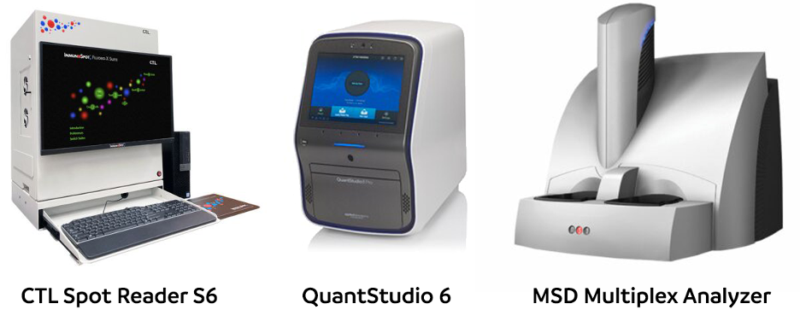
Depending on study design, Southern Research also supports:
- Virus neutralization assays using live infectious virus
- Viral load and viremia testing by RT-PCR to assess efficacy endpoints
- ELISA-based binding assays to measure broad antibody responses
- T-cell assays, including ELISpot and MSD platform assay, to evaluate cell-mediated immune responses using PBMCs and serum samples
These platforms have been applied across a range of vaccine programs, including influenza, dengue, SARS-CoV-2, and mpox, with assay selection driven by both immunogenicity and efficacy objectives.
GCLP Execution With Full Chain-of-Custody Control
All clinical sample testing is performed under Good Clinical Laboratory Practice (GCLP), ensuring data integrity, traceability, and regulatory readiness. Southern Research’s operators are GCLP-trained and certified, and samples are tracked from receipt through disposal using a validated laboratory information management system (LIMS).
This cradle-to-grave chain-of-custody approach applies equally to clinical samples and viral materials, providing sponsors with confidence that sample integrity is maintained throughout the study lifecycle.
Experience That Extends Beyond Commercial Programs
What truly differentiates Southern Research is not just technical capability, but the depth of experience behind it. The organization has supported influenza clinical trials for more than 15 years and has played a role in NIAID-funded programs as an IDIQ contractor—a status that requires extensive vetting and regulatory review.
Additionally, Southern Research is actively contributing to and taking part in the World Health Organization’s (WHO) initiative and consortium effort to harmonize the Mpox neutralization assay on a global scale. This is a significant step in our continued collaboration and commitment to advancing public health.
For these reasons and many others, assay validation protocols developed at Southern Research have been reviewed and refined in collaboration with a number of highly-regarded agencies such as NIAID/BARDA and the FDA. That process results in optimized, regulator-vetted assay methods that sponsors can leverage directly within their own programs. While sponsors pay for assay execution and validation, they benefit from protocols shaped by years of regulatory interaction and real-world application.
Efficiency Without Compromising Rigor
Speed matters in infectious disease research, but never at the expense of quality. Southern Research continuously invests in internal R&D to improve assay throughput and reduce turnaround times. This includes assay miniaturization, higher-density plate formats, and ongoing optimization of laboratory workflows.
Beyond the bench, the organization is also modernizing data review and reporting processes. Standardized reporting templates, improved quality control workflows, and thoughtful adoption of advanced analytics tools help ensure that data delivery is both timely and consistent—because, ultimately, the report is the product sponsors rely on to move their programs forward.
A Boutique CRO With Direct Scientific Access
Southern Research operates as a boutique, academically rooted CRO—focused on excelling at specialized assays. Sponsors work directly with study directors who remain actively involved in laboratory execution and oversight, rather than being separated by layers of project management.
This level of engagement allows sponsors to ask questions, address challenges, and make informed decisions in real time. It is a hands-on partnership model that many clients return to repeatedly, especially for complex viral programs where scientific nuance matters.
A Trusted Partner for Complex Viral Programs
From live-virus neutralization assays to regulatory-ready clinical testing, Southern Research brings together biosafety expertise, scientific depth, and collaborative execution to support vaccine and antiviral clinical trials. For sponsors navigating the demands of emerging infectious diseases and pandemic preparedness, that combination can make all the difference between data that simply meets requirements—and data that truly advances a program.